
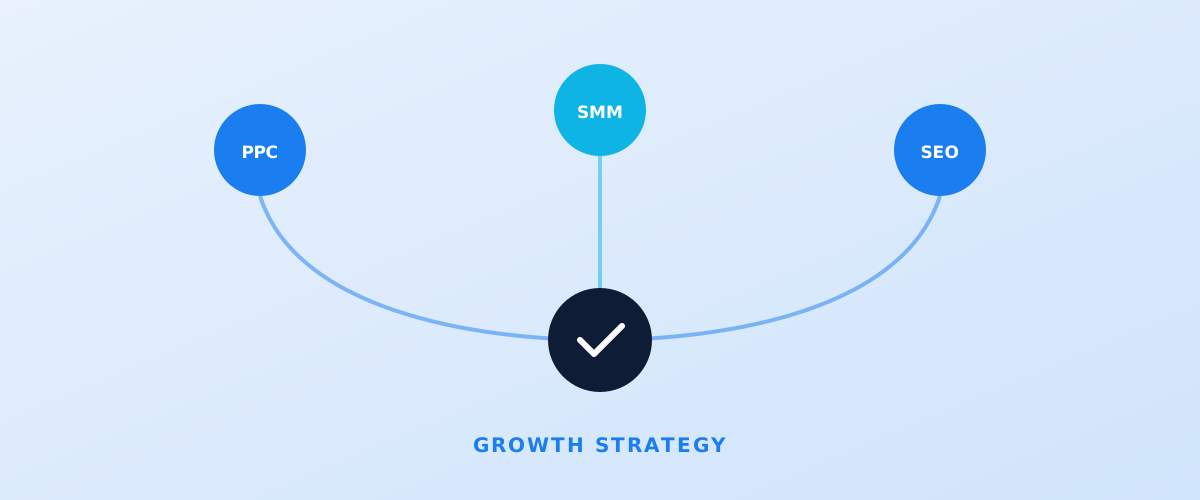
The "SEO, SMM, or PPC" question usually comes up when the budget is tight and only one channel can be funded at launch — not because the channels are interchangeable. In practice they solve different problems: paid search puts an offer in front of people already searching for a solution right now, social ads build awareness and trust where there's no active search yet, and SEO builds a free traffic source for years to come but takes time to ramp up. Below: how each channel works, an honest comparison of cost and timeline, and a framework for choosing based on your actual situation.
01 Short answer
If you need to pick one channel right now, here's the general guide.
- You need leads within days and can afford to pay per click — start with paid search (Google Ads).
- The product is visual, emotional, or bought on impulse, and the click budget is tight — start with social ads (Facebook, Instagram, TikTok).
- The business plans to stay in this niche for a year or more and can wait 3–6 months for results — start SEO alongside any paid channel, since the later you start, the later the free traffic arrives.
- The budget genuinely covers only one channel — paid ads deliver a faster, more predictable result, and SEO is worth starting the moment there's room to run both at once.
Below: why, and how the choice plays out for specific types of business.
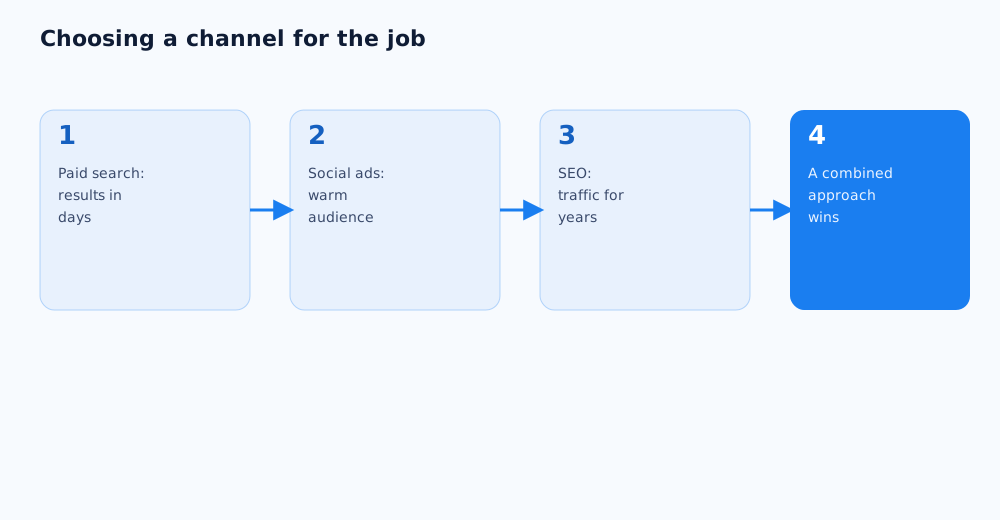
02 How each channel works and when it pays off
The difference between channels isn't just the mechanics of how the ad shows — it's what stage of demand each one works on, and how long it takes to see a first result.
- Paid search (Google Ads). Shows an ad to people who've already formed a query and are searching for a solution right now. Clicks and leads arrive on day one, but the traffic stops the moment the budget does — nothing accumulates.
- Social ads (Facebook, Instagram, TikTok). Targets people by demographics and behaviour who haven't actively searched for the product yet. It works on a colder audience, so the cycle from impression to lead is usually longer than paid search — but it's a strong fit for a visual product and for building brand awareness.
- SEO. Builds organic rankings in Google for the queries your audience actually searches. The first noticeable results usually take 3–6 months depending on competition in the niche — see SEO vs PPC: which to choose and when both channels work together for the full timeline breakdown. Unlike paid ads, SEO traffic keeps coming even after active work on the site pauses for a while.
03 Comparing budget, timeline, and demand type
A direct comparison of all three channels only makes sense on a few specific criteria — there's no single formula for "which is more cost-effective", because each channel solves a different problem at a different stage of the funnel.
| Criterion | Paid search | Social ads | SEO |
|---|---|---|---|
| Time to first result | Hours to days | Days to weeks | Months |
| Type of demand | Already formed (hot) | Latent, shaped by the ad | Formed, searched for directly |
| What happens when spend stops | Traffic stops immediately | Traffic stops immediately | Rankings hold for a while |
| What the site needs | A landing page per campaign | Creative assets and a landing page | Regular content and technical SEO |
Actual budget and timeline for each channel depend on the niche, region, and competition — exact figures with no context would just be guesswork, so it's more useful to think in terms of this structure than an average number pulled from someone else's case study.
04 Which channel fits which type of business
The right channel to start with depends heavily on the type of business, the sales cycle, and exactly how customers search for a solution. These are general patterns, not a hard rule.
- Services with explicit demand (repairs, legal services, healthcare) — paid search usually pays off fastest, because people already phrase a query the moment the need arises.
- Online stores — a mix of paid search (including Shopping campaigns) for hot demand and SEO for category and product pages that will keep earning free traffic for years. Social ads work well for visual categories and remarketing.
- B2B with a long sales cycle — SEO and content often win on cost per qualified lead, because the decision isn't instant; social ads and paid search work better as support once a prospect already knows the product.
- Local businesses (a café, a salon, a gym) — combining local SEO with social ads targeted a few kilometres around the location usually beats paid search, which tends to be competitive and expensive in local niches.
05 What happens with only one channel
Sticking to one channel isn't a mistake by itself, especially early on with a small budget — but each option comes with a predictable trade-off worth understanding upfront.
- Paid ads only (search or social) — a fast result, but total dependence on budget: the moment spend stops, leads stop the same day, and the site builds no lasting value in organic search.
- SEO only — the cheapest source of traffic per conversion in the long run, but the business goes without a meaningful lead flow for the first few months, which is risky without another source of revenue in the meantime.
- Social ads only, with nothing else — builds awareness and loyalty, but conversion to a lead is usually lower than paid search, since part of the audience isn't ready to buy the moment the ad shows.
For more on what stops targeted ads from working well when they're launched in isolation with no supporting infrastructure, see why your targeted ads are not working.
06 Why a combined approach usually wins
In practice, the three channels aren't competing for the same budget — they cover different touchpoints on the path from first hearing about a brand to submitting a lead, and together they outperform any one of them alone.
- Paid search and SEO often occupy the results page for the same commercial keyword at once — a paid ad at the top and an organic listing below increase overall CTR for that query instead of competing for the same click.
- Social ads warm up an audience that isn't ready to search on Google yet, and those same people later search for the brand directly more often — which strengthens organic rankings for branded terms.
- Remarketing ties the channels together: someone who arrived from organic search but didn't convert can be brought back later through a targeted ad.
A combined approach doesn't mean an equal budget across all three channels from day one — usually one channel launches first to generate a fast flow of leads, and the others get added as the budget grows and data shows what actually works best in that niche. See how to allocate a small business marketing budget for how to split spend across stages of growth.
07 How to decide: a short framework
Instead of chasing a universally "best" channel, it's more useful to answer a few specific questions about the business itself — the answers almost always point to a concrete combination of channels.
- How long can the business operate without a meaningful lead flow from a new channel — if it's a matter of days, paid ads are non-negotiable at launch.
- Do prospective customers phrase an explicit search query ("buy X", "order Y in [city]") — if so, paid search and SEO will outperform social ads.
- How visual and emotional is the product — the more the purchase decision depends on looks or inspiration, the more sense social ads and visual content make.
- Is the business planning to stay in this niche for more than a year — if so, SEO is worth starting alongside any paid channel, even on a small budget, since starting earlier means the free traffic arrives earlier too.
If it's still hard to prioritise after answering these, it's worth talking it through with a team that runs all three channels and can compare them against real data from the niche. See Grottix's services — SEO, paid search, and social ads under one strategy — or SEO promotion alone if the priority is already clear.
08 FAQ
Which channel should a business with a limited budget start with?
If the budget only stretches to one channel, paid ads (search or social, depending on the type of demand) usually deliver a faster, more predictable result than SEO, which needs several months to ramp up. SEO is worth launching as soon as there's room to run two channels in parallel.
Can a business skip SEO if paid search is already generating leads?
It can, but that means total dependence on budget — the moment the ads stop, leads stop the same day. SEO builds a traffic source that keeps working even during a pause in paid spend, which is why it's usually added as the business grows rather than skipped entirely.
Which is cheaper long-term — SEO or paid search?
Over the long run, the cost per acquisition from SEO usually falls as rankings improve, while paid search keeps the cost per click as an ongoing expense for as long as the ads run. That said, SEO needs time and investment in content and technical work before it pays off, so the comparison only holds over a long horizon, not the first few months.
Do social ads work for B2B?
Yes, but usually as a supporting channel rather than the main source of leads: B2B decisions take longer and usually involve more than one person, so social ads tend to work better for brand awareness and remarketing to people who've already visited the site than for generating cold leads directly.
How do I know a business needs all three channels at once?
That usually happens at the growth stage, once one channel already delivers a steady flow of leads and there's budget to expand. A sign it's time to add more channels: competitors occupy the whole results page for key terms — both paid and organic — while the business only shows up in one part of it.
How much budget does it take to run all three channels at once?
There's no universal number — it depends on the niche, region, and competition. A sound approach is not to split a small budget evenly across three channels from day one, but to concentrate it on one channel until it produces steady results, then add the others as the budget grows.