

01 Short answer: what E-E-A-T is
E-E-A-T isn't a separate algorithm or a ranking factor you can measure with a single number — it's a framework Google's quality raters and related algorithmic signals use to judge how trustworthy a page is. The letters stand for Experience, Expertise, Authoritativeness, and Trustworthiness. Google's own guidance on creating helpful content states plainly that "of these aspects, trust is most important": even expert content falls flat without trust in the site behind it.
Below, each component is broken down on its own, where Experience came from as a separate criterion, what you can actually do on a site's pages, and why an author's personal brand has become a meaningful part of this assessment.
02 What E-E-A-T is made of
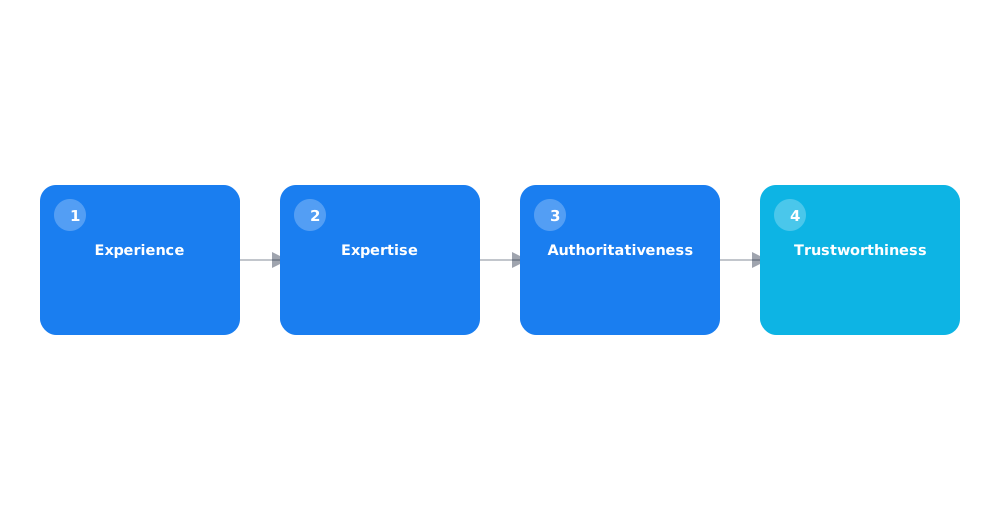
Each of the four components answers its own question about a page and the person who wrote it.
- Experience — does the author have real, hands-on experience with the topic: have they used the product, worked with the service, or tested the method in practice?
- Expertise — does the author have the knowledge and qualifications the topic requires: education, professional background, depth of understanding?
- Authoritativeness — do other experts, publications, and sites in the niche recognize the author or site as a source on the topic?
- Trustworthiness — can the information, the accuracy of the data, and the site's intentions be trusted: is the page honest with the reader?
03 Why Experience became its own factor
Until late 2022, the concept was called E-A-T — without the first "E." Google added Experience as its own component once it became clear that expertise and authority weren't enough: a piece of writing could be technically sound and written by a professional, yet show no sign the author had actually encountered the topic in practice.
In practical terms, that's the difference between "here's how this works in theory" and "here's what we did for actual clients." Case studies, screenshots of real results, and specific numbers and details you can't find copied from someone else's article are exactly the kind of Experience signals that are hard to fake without the real thing.
04 How to show expertise on a site's pages
Expertise doesn't come from a single line claiming "we're professionals" — it's shown through specific, checkable details on the page itself.
- naming the article's author with their qualifications and professional background, rather than publishing anonymously under the site's name;
- real examples, case studies, and numbers instead of general claims with nothing backing them up;
- links to primary sources wherever a statistic or technical fact is cited;
- up-to-date content — a publish and update date, especially for topics that change quickly;
- no factual errors or internal contradictions in the text.
These requirements are especially strict for medical, legal, and financial topics (YMYL) — more on that below, with a practical breakdown for one YMYL niche in SEO for a medical clinic.
05 Personal brand: what to add to an expert's profile
A personal brand isn't about a follower count — it's about whether a real, named person with real experience can be verified behind the content. For a site, that comes down to a few concrete, easy-to-implement elements.
- an "About the author" or "About the expert" page with a real name, photo, title, and professional background;
- links to the author's profiles on LinkedIn, industry communities, or publications on other sites;
- Person or Organization structured data that explicitly ties the author to the content;
- consistent author attribution across every piece where they act as the expert, not a one-off credit on a single page.
These elements work alongside a brand's broader reputation online — how a company is discussed in reviews and mentions is covered in reputation management (SERM) and E-E-A-T.
06 YMYL topics: higher requirements
YMYL — Your Money or Your Life — refers to topics where a content mistake can directly affect someone's health, finances, or safety: medicine, law, financial services, safety. For these topics, E-E-A-T requirements are considerably stricter than for entertainment or general-interest content.
That means general claims and an "expert tone" without a real, verifiable author qualification aren't enough for a YMYL niche: it takes confirmed credentials (licenses, certifications, relevant education), clearly cited sources for medical or legal claims, and regular updates as regulations or practice change.
07 A practical checklist for strengthening E-E-A-T
Here's a sequence for strengthening E-E-A-T on an existing site, starting with the most visible changes and moving to finer details.
- Attribute key blog posts and commercial pages to a named author with real credentials.
- Create or expand an "About the company" / "About the expert" page with verifiable details.
- Replace general claims in the text with specific examples, case studies, and real numbers.
- Confirm every fact and statistic links back to a primary source.
- Set up Organization and author structured data wherever technically feasible.
- Collect and display real reviews and brand mentions rather than editing them by hand.
This checklist pairs naturally with a broader technical SEO audit — how to run one yourself is covered in a self-run SEO audit.
A missing brand voice is a common sign of weak content, ad creative included; how to avoid losing quality when generating copy and creatives with AI is covered in AI-generated ad copy and creatives.
08 FAQ
Is E-E-A-T a Google ranking factor?
Not directly as one measurable signal — it's more of a framework quality raters and related algorithmic signals use to judge how trustworthy a page is. It affects rankings through a number of more concrete signals: authorship, links to sources, and site reputation.
How is Experience different from Expertise?
Expertise is knowledge and qualifications in a topic, while Experience is real, hands-on exposure to it — whether the author actually used the product or service rather than just knowing about it in theory. Google added Experience as its own component in late 2022.
Should every blog post name an author?
Yes, especially posts with expert or practical content. Content published anonymously under a site's name is harder to assess as expert content than a piece with a named author, their credentials, and their experience.
For YMYL topics, which matters more — author expertise or cited sources?
Both are required and work together: confirmed author credentials (licenses, education) and clearly cited primary sources for medical, legal, or financial claims.
Does a personal brand on social media help with E-E-A-T?
It helps if it backs up real expertise and experience — publications, talks, mentions in industry communities. A follower count on its own isn't an E-E-A-T signal.
How quickly can a site's E-E-A-T improve?
The first changes — attributing authors and building an expert page — can happen fast, but E-E-A-T signals accumulate over time: regular updates, mentions, and being cited as a source build up gradually rather than from a single edit.