
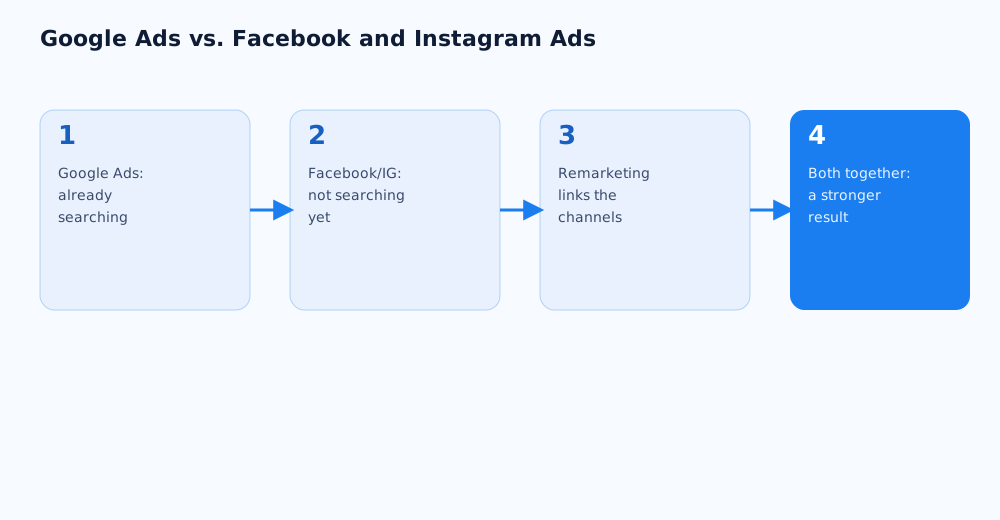
The "Google Ads or Facebook Ads" question for an online store usually comes up when the budget is tight and only one channel can launch first. In practice the two channels cover different parts of the funnel: Google Ads shows a product to people already searching for it or browsing Google Shopping, while Facebook and Instagram reach people who haven't actively searched yet but match on interests and behaviour. Below: how each channel works for ecommerce, an honest comparison by data and format, and a practical framework for choosing.
01 Short answer
If the budget only covers one channel at launch, here's the general guide.
- Customers search for the product by name or model in Google ("buy X", "X price") — start with Google Ads, including Shopping campaigns built on a product feed.
- The product is visual, emotional, or not well known, and the purchase decision depends on how it looks — start with Facebook and Instagram.
- The catalogue is large and varied — Google Ads (Shopping or Performance Max) usually delivers more predictable ROI at launch because the ads tap into demand that already exists.
- The budget covers both — use Google Ads for hot demand and Facebook/Instagram for reach and remarketing, rather than picking one over the other.
Below: the detail behind each point, and how the two channels work together rather than in isolation.
02 How each channel works for an online store
The difference between the channels isn't just the ad manager interface — it's what stage of demand each one shows ads at.
- Google Ads. Shows an ad or product listing the moment someone is actively searching: typing a query or browsing Google Shopping. Shopping campaigns and Performance Max pull directly from a product feed, which makes them a strong fit for a catalogue with dozens or hundreds of items — see the Google Shopping and Merchant Center guide for the details.
- Facebook and Instagram Ads. Targets people by interest, behaviour, and demographics who haven't formed a search query yet. The format is more visual — photo, video, product carousels — which works well for emotional, visually driven categories.
Both channels support dynamic remarketing — showing specific products to people who've visited the site but didn't buy; the general principle and setup are covered in retargeting and remarketing: what it is and how to set it up.
03 Comparing data, formats, and click cost
A direct comparison only makes sense on a few specific parameters, not an abstract "which is better" — the two channels run on different auction mechanics and formats.
| Parameter | Google Ads | Facebook / Instagram Ads |
|---|---|---|
| What triggers the ad | A search query or buying intent | Interests, behaviour, demographics |
| Product ad format | Shopping ads, Performance Max | Catalogue, carousel, collection |
| Targeting data | Keywords, product feed | Pixel, lookalike audiences, interests |
| Works best for | Explicit demand, large catalogues | Visual, emotional categories |
Click cost and conversion rate depend heavily on the niche, season, and competition — average figures from someone else's case study rarely apply to a specific store, so the decision is better made from this structure than from borrowed numbers.
04 Which channel fits which product type
Product type and price strongly affect which channel pays off faster and cheaper at launch.
- Products with an explicit brand or model (electronics, parts, clothing brands) — Google Ads tends to perform better because the buyer already knows what they're looking for.
- Visual categories (clothing, home decor, jewellery, cosmetics) — Facebook and Instagram work well thanks to the format and the visual discovery of a product the shopper wasn't already thinking about.
- Expensive, infrequent purchases (furniture, premium appliances) — usually need a longer cycle: reach and awareness on social first, then a remarketing pull once the decision has matured.
- Impulse and low-cost items — Facebook and Instagram often deliver a lower acquisition cost thanks to an audience ready to buy on an emotional trigger.
05 Using both channels together
In practice the two channels aren't fighting over the same budget — they cover different touchpoints with the buyer, and together they often outperform either one alone.
- Google Ads captures demand that already exists, while Facebook and Instagram create demand for future searches — some of the audience that sees a social ad later searches for the brand or product directly in Google.
- Remarketing ties the channels together: someone who came from organic search or Google Ads but didn't buy can be brought back through a targeted ad on Facebook or Instagram.
- The same product feed can power both channels at once — Google Shopping and the Meta catalogue run on the same underlying product structure.
Combining channels doesn't mean an equal budget from day one — usually one channel launches first, and the second gets added once the first is already producing a steady stream of orders.
06 Measuring results by channel
Comparing channels without one consistent measurement system usually leads to the wrong conclusions — conversions and ROI are calculated differently inside Google Ads and Meta Ads Manager, and without shared analytics it's hard to tell which channel actually drives more profit.
- Track more than clicks and conversions inside the ad platform's own dashboard — look at order value and margin, not just cost per click.
- Use a single analytics source (like GA4) as an independent point of truth instead of relying only on each ad platform's own reporting — both tend to over-credit their own contribution to a conversion.
- Calculate cost per lead or per order separately for each channel so the comparison uses the same unit, not each platform's own default metric.
07 Common mistakes when choosing a channel
Most problems with channel choice come from how it's chosen and launched, not the platform itself.
- Copying someone else's case study instead of your own niche. What worked for one product category is no guarantee in another — demand structure and price point differ too much.
- Launching without a product feed. Manually building an ad for every product doesn't scale — a catalogue with dozens of items needs a feed connected to both channels.
- Giving up on a channel too early. Facebook and Instagram often need more time to learn than Google Ads — pulling a campaign after a few days doesn't give the system enough data.
- Comparing by cost per click instead of profit. A cheaper click doesn't mean a better channel if conversion rate or average order value is lower.
If it's hard to decide which channel to prioritise for a specific catalogue, it's worth discussing with a team that runs both and can compare them against real data from the niche — see Grottix's paid search and social ads services.
Beyond choosing between channels, a store with a large catalog is worth setting up dynamic remarketing for separately — how to show shoppers the exact products they viewed is covered in dynamic remarketing for an online store.
08 FAQ
Can I run Google Ads and Facebook Ads at the same time on a small budget?
You can, but with a small budget it's usually more effective to focus on one channel until it produces a steady flow of orders, then add the second. Splitting a small budget across two channels at once often leaves neither one with enough data to learn properly.
Which channel is cheaper for an online store?
There's no single answer — cost per click and conversion rate depend on the niche, season, and competition in that specific category. For products with explicit search demand, Google Ads often gives a more predictable cost per order, while visual, impulse categories can be cheaper on Facebook or Instagram.
Do I need a product feed for both channels?
Yes — for a catalogue with many products, a feed saves time and unlocks automated formats: Shopping campaigns and Performance Max on Google, catalogue and dynamic ads in Meta Ads Manager. The same feed, with minor adjustments, works for both platforms.
How do I know which channel actually drives more profit?
Compare order value and margin, not cost per click, ideally through independent analytics like GA4 rather than each ad platform's own reporting — both tend to overstate their own contribution to a conversion.
Should a brand-new online store with no sales history use both channels?
Early on it's usually smarter to launch one channel, gather the first data on demand and buyer behaviour, then add the second based on that data. Launching both at once with no track record makes it harder to tell what actually worked.
Does advertising on Facebook affect Google rankings?
Not directly — social ads don't influence organic Google rankings. But indirectly, social ads build brand awareness, which leads part of the audience to search for the brand directly on Google later — that increases organic traffic for branded terms.