
Retargeting brings back people who've already visited the site but didn't enquire or buy. It's the cheapest advertising channel by cost per lead, because the audience already knows the brand. This guide covers how retargeting differs from remarketing, how to build audiences, and how to set it up in Google Ads and Meta without the stalking effect.
01 Retargeting and remarketing: is there a difference
Both terms describe the same thing: showing ads again to people who've already interacted with the brand. The only difference is where each word caught on.
How it settled:
- "Remarketing" — historically a Google Ads term;
- "Retargeting" — stuck with Meta, other social platforms, and Yandex;
- in Google's current interface it's called "your data" segments — the rename doesn't change the substance.
The mechanics are the same everywhere: the system builds an audience of people who met a condition and shows them ads separately from cold traffic. What Google counts as these audiences is described in the help on data segments.
02 How it works and why it's cheaper than cold traffic
Retargeting reaches people who already know who you are: visited the site, viewed a product, read an article. They don't need the company explained — just a reminder and the last objection removed.
Hence the channel's traits:
- higher CTR and lower cost per click — the audience is warm;
- lower cost per lead than advertising to a cold audience;
- limited volume — the audience is no bigger than the site's visitor count, so retargeting scales conversion, not reach;
- its role in the funnel is to close people who've shown interest, not to acquire new ones.
So retargeting almost always runs alongside cold-audience advertising, not instead of it.
03 Building audiences
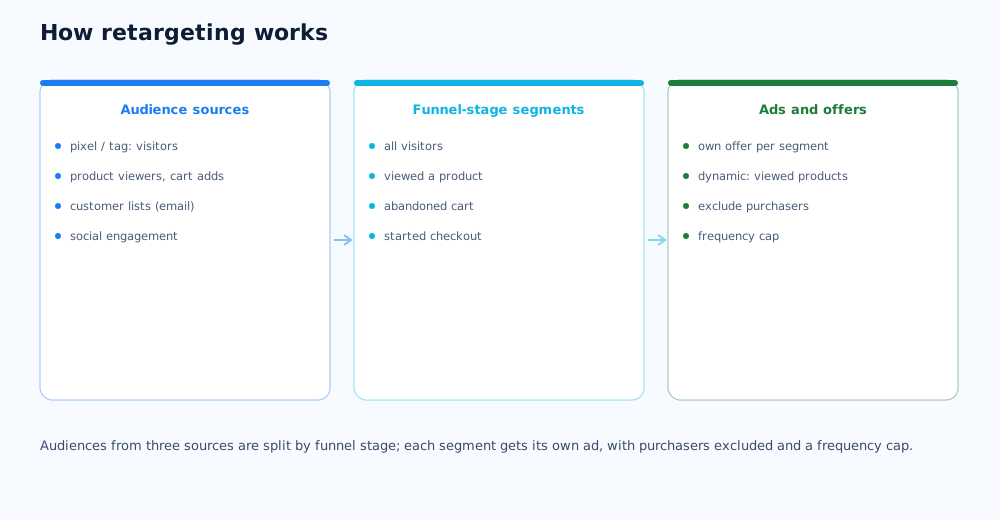
Before setting up ads, you need lists of people to show them to. There are three sources, and usually all three are used.
Via a pixel or tag on the site
The Meta Pixel or Google tag records visitors and their actions. From that you build segments: all visitors, visitors of specific pages, cart adds, checkout starts. How to set up the Meta infrastructure is covered in the article on the Meta Pixel and Business Manager, and analytics setup in the one on Google Analytics 4.
Customer lists
Uploading a file of emails or phone numbers lets you advertise to existing customers: Customer Match in Google Ads, Custom Audiences from a list in Meta. This works for reactivation, cross-sells, and excluding current customers from cold campaigns.
Social engagement
Meta builds audiences by interaction: watched a video, opened the profile, messaged, reacted to posts. This reaches people who haven't visited the site but engaged with the brand on social.
04 Remarketing in Google Ads: standard and dynamic
In Google Ads, remarketing works on several levels, from simple banners to inserting specific products.
The main formats:
- Standard remarketing — static ads on the Display Network and YouTube by audience lists;
- Dynamic remarketing — pulls from the product feed the specific items a user viewed or added to cart;
- Search remarketing — bid adjustments for past site visitors when they search again on Google;
- Signals for Performance Max — remarketing lists are used as audience signals; how that works is covered in the article on Performance Max.
"Your data" segments are set up in the Google Ads account and supplemented with GA4 audiences when accounts are linked. The basic account setup is covered in how to set up Google Ads yourself.
05 Retargeting in Meta: funnel-stage segments
In Meta, retargeting is built on custom audiences split by interaction depth. The closer someone got to purchase, the more specific the offer.
Typical segments:
- all site visitors over a period;
- viewed a specific product or category;
- added to cart but didn't check out;
- started checkout but didn't finish;
- already bought — this segment is excluded from product retargeting and used for cross-sells.
For a store, segments are linked to the catalogue so dynamic ads show viewed products. The list requirements and custom audience options are in Meta's help on website Custom Audiences. What the budget for these campaigns is made of is covered in how much Instagram and Facebook ads cost.
06 Funnel scenarios and frequency
Retargeting works best when the message matches the step where the person stopped. One banner for everyone is a missed opportunity.
Working scenarios:
- Abandoned cart — a reminder of the item, sometimes with an incentive (delivery, a discount for a quick order);
- Viewed but didn't buy — removing objections: reviews, guarantees, comparisons;
- Already bought — related products or a repeat purchase after a few days or weeks;
- Read the blog but didn't move to a service — a gentle push to the commercial page.
In all scenarios, cap the frequency so a reminder doesn't become nagging, and keep 2–3 creatives in rotation.
07 Mistakes and privacy
Retargeting often "doesn't work" because of settings, not the platform. Here's what spoils results most often.
- too narrow an audience — almost no impressions; or too broad — the point of segmentation is lost;
- no exclusion of people who already bought — budget goes to pointless impressions;
- one creative for all segments with no rotation — fast burnout;
- no frequency cap — the stalking effect and rising cost;
- ignoring cookie consent and privacy settings — part of the audience isn't collected, and without correct consent signals the lists don't grow.
Other reasons paid ads fail to bring leads are covered in why paid social ads fail. Setting up retargeting that closes rather than annoys can be done with our help — it's part of the paid advertising services.
Remarketing pairs especially well with Google Ads and Facebook Ads for an online store, and building a new audience based on people who've already visited the site is where lookalike audiences come in.
For an online store with a product feed, remarketing can go a step further than a generic reminder — showing the exact products a user viewed; how to set that up is covered in dynamic remarketing for an online store.
Reaching back out to a customer can also happen through a messenger, not just ad remarketing — a comparison of Viber, Telegram, and WhatsApp for this task is covered in a separate article.
Remarketing is only one of two tools working an audience at different funnel stages; a comparison with lookalike and when to use each is in remarketing vs lookalike.
08 Frequently asked questions
What's the difference between retargeting and remarketing?
Essentially nothing — both terms mean showing ads again to people who've already interacted with the brand: visited the site, viewed a product, engaged with a social profile. Historically "remarketing" stuck with Google and "retargeting" with social platforms. In Google's current interface it's called "your data" segments.
How do I build a retargeting audience?
Three ways: via a pixel or tag on the site (all visitors, visitors of specific pages, people who took an action), by uploading a customer list with emails or phone numbers (Customer Match in Google, Custom Audiences in Meta), and via social engagement (watched a video, messaged, engaged with posts). Each list has a membership duration — say 30 or 180 days.
Why is retargeting cheaper than cold traffic?
Because the audience already knows the brand: ads get a higher CTR and a lower cost per click and per lead. But the volume is capped by the audience size — it's a channel for closing people who've already shown interest, not for acquiring new ones. You can't scale a business on retargeting alone.
What is dynamic remarketing?
It's remarketing that shows the user the specific products they viewed or added to cart, not a generic banner. It runs off a product feed: the system pulls the image, name, and price of the relevant item. It's especially effective for online stores with a large catalogue.
Should I exclude people who already bought?
Yes, almost always. If you don't exclude buyers from the retargeting audience, you pay to show a product ad to people who just bought it — annoying and wasteful. Exclude them with a separate "purchasers" segment. For cross-sells, run a separate campaign with its own offer.
How often should retargeting ads show?
Cap the frequency: for most niches a few impressions per person per day is enough. Without a cap the ads become stalking, cause irritation, and lose effectiveness. Rotating a few creatives and gradually shortening the list membership window also help.