
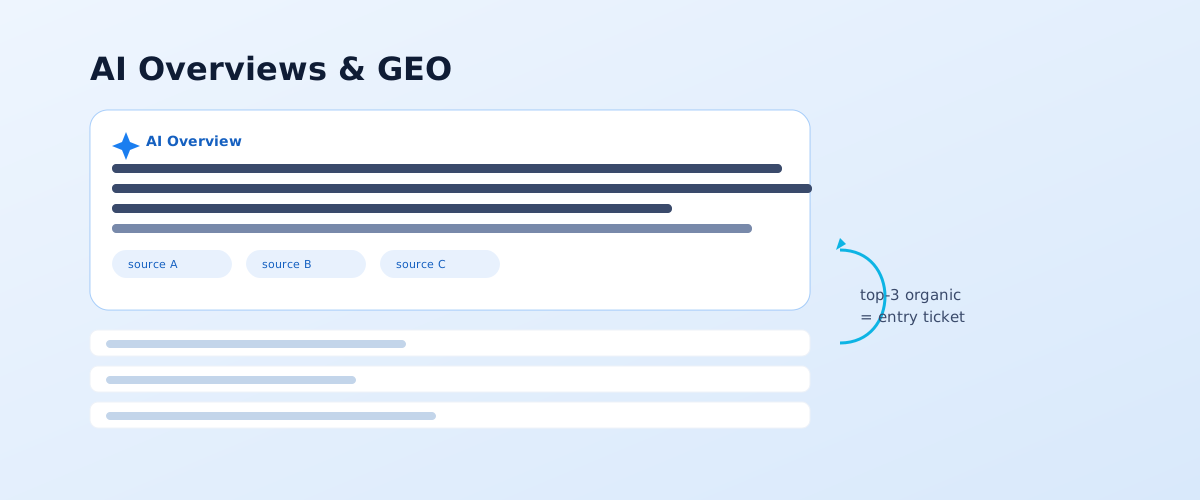
AI Overviews — the answer block Google generates with a neural network and shows above the regular results — has changed how people get information from search. That created demand for "AI optimization", or GEO. But the term often hides confusion: some look for secret tricks, others fear losing traffic. In reality Google states plainly that optimizing for generative features is still SEO. Below we break down how AI Overviews picks sources, what is actually worth changing on the page, and what happens to organic traffic.
01 What AI Overviews and GEO are — and why it is "still SEO"
AI Overviews (labelled "AI Overview" in the interface) is a generated answer to a query that Google places above the list of links and accompanies with a few sources. GEO (generative engine optimization) is the general term for the work of getting content into such answers, not only in Google but also in ChatGPT, Perplexity and other systems.
The key point: there is no separate "GEO" technology. In its guide to optimizing for generative features, Google says plainly that it is the same fundamentals — helpful content, a technically accessible site, reliable information and a good overall search experience. AI Overviews are built on the same ranking and quality systems as regular results.
Hence a practical conclusion that saves budget: do not chase "GEO tactics" in isolation from SEO. First the site has to rank properly — without that it will not appear in an AI answer. And only on top of working SEO does it make sense to fine-tune content structure for how the AI extracts passages.
02 How AI Overviews picks sources
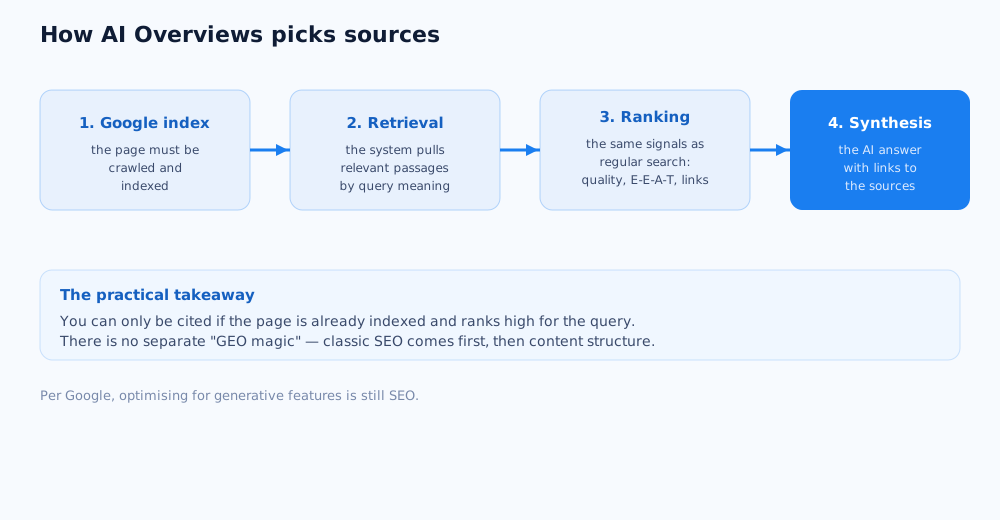
To understand what to optimise, it helps to picture the path from query to answer. It has four stages, and each has requirements for the page. The diagram below shows this chain.
What happens at each stage:
- Index. The page must be crawled and indexed — accessible to the bot, unblocked, with a correct response code.
- Retrieval. The system pulls passages that answer the query by meaning from suitable pages. A clear structure helps here: understandable subheadings and paragraphs where a thought is stated in full.
- Ranking. Candidates are assessed by the same signals as in regular search: quality, expertise, links, intent match. There is a consistent link between top-3 positions and being cited.
- Synthesis. An answer is formed from the selected passages, with links to the sources alongside.
03 What to change in content
Content changes for AI Overviews are not a rewrite of the whole site but a few principles that make text easy to extract and raise trust in it. Google recommends the same in its guide on helpful content.
A direct answer at the start of the section
Start each section with a short factual statement that answers the implied question, and only then expand into detail. Not "in this article we will talk about timelines" but "the first SEO results appear in 4–6 months, steady growth in 6–12". The system can take a paragraph like that as a ready-made answer passage.
Facts, figures, expert quotes
Content with specifics — numbers, ranges, step-by-step instructions, specialist quotes and links to primary sources — reads as more citable than general commentary. It matters that the facts are verifiable and not invented: systems filter out unreliable specifics over time, and the site loses trust.
Freshness and completeness
On topics where information goes stale — algorithms, tools, prices, legislation — currency matters: an update date, revised figures, removal of outdated claims. Completeness matters too: a page that covers the topic in full and answers adjacent questions is cited more often than a scatter of short notes in pieces. Working out which adjacent questions to cover on one page comes down to query clustering — it is covered in the guide how to do keyword research.
04 What to change technically: structure and markup
The technical side of GEO almost fully overlaps with ordinary technical SEO — some things just become more critical. Below is what to pay separate attention to.
- Crawlability. Content should be delivered in HTML, not only loaded by script; robots.txt and meta tags must not block the pages you need.
- A clear heading structure. One H1, a logical H2–H3 hierarchy where each subheading is a separate question or subtopic; this makes it easier for the system to match a passage to a query.
- Structured data. Markup by Google's rules helps it understand the content more precisely. Add it only for content that is actually visible — markup that does not match the page text is harmful.
- Speed and the mobile version. The same requirements as for regular results; a slow or mobile-broken page ranks worse and so becomes a candidate less often.
- Tables, lists, FAQ blocks. An organised layout (a comparison table, numbered steps, short question-answer pairs) gives the system ready-to-extract structures.
05 The brand as an entity: mentions and authority
Generative systems cite sources they recognise as an authority on the topic more readily. This is not about one clever signal but about the brand being mentioned consistently alongside its topic across the web: in articles, directories, reviews, on industry platforms, in listings.
What builds recognition of the brand as an entity:
- a single, exact company name everywhere it is mentioned, plus an "About" page with verifiable facts;
- mentions in topical material and press, not necessarily with a link — the fact of the "brand + topic" association matters;
- authored material from real specialists with their credentials stated;
- a presence in industry directories and on review platforms.
This is long-term work that overlaps with classic link building and reputation marketing, but it pays off in both regular results and AI citations.
06 How to track appearing in AI answers
There is no direct "you were cited this many times" report in Google, so tracking is built from several indirect methods. None gives the full picture, but together they show a trend.
- Manual checks. Periodically enter a list of target queries and see whether an AI Overview appears and whether your site is cited in it. Labour-intensive, but accurate for a small set of queries.
- Search Console. An indirect sign is a CTR drop with stable or rising impressions on informational queries: some users get the answer in the block and do not click. How to read this data correctly is in the article how to check your Google rankings.
- Third-party tools. Tools for monitoring AI Overviews and brand mentions in AI answers have appeared; check whether they support your language and region before relying on their data.
- Testing in the AI systems. Ask your target questions in different generative systems and see which sources they cite and why those are better in structure and completeness.
07 What happens to organic traffic
AI Overviews do redistribute clicks, but not equally across query types. Understanding which content is at risk and which is not helps you avoid panic and set priorities correctly.
- Lose clicks. Simple factual queries with a short, unambiguous answer: definitions, single facts, quick lookups. The user gets the answer in the block and does not visit the site.
- Barely affected. Commercial and transactional queries (buy, order, price), local queries, queries involving a choice or comparison, and topics that need an action or a consultation. Here a click is still needed.
- Gain. Deep content that answers more fully than a short summary: detailed guides, breakdowns with examples, expert material. It both gets cited and gets visits from people for whom a short answer is not enough.
The practical takeaway for a business: do not try to "out-play" AI Overviews on simple reference queries, but invest in content that creates demand and leads to a service. How to split effort between informational and commercial content and channels is covered in the articles SEO vs PPC and how long does SEO take. Setting up organic work with AI search in mind can be done with a team — the approach is described on the SEO promotion page.
How AI Overviews fit into the bigger picture of search changes is covered in the SEO trends 2026 overview.
Being mentioned in an AI-generated answer is a related but separate metric from ranking in AI Overviews; how to check it is covered in brand AI visibility.
08 Frequently asked questions
Do I need a separate strategy for AI Overviews?
A separate one, no. Google states plainly that optimizing for generative features is still SEO: the same helpful content, technical accessibility and trustworthiness. The difference is in emphasis: clear direct answers at the start of sections, factual density, and a structure the AI can easily extract a passage from.
How do I know if my site appears in AI Overviews?
There is no direct report. Options: manually enter target queries and check whether your site is cited in the block; watch Search Console for a CTR drop with stable impressions on informational queries, which is an indirect sign; use third-party AI Overviews monitoring tools if they support your language and region.
Will AI Overviews kill organic traffic?
Not all of it. Simple informational queries with a short answer lose the most clicks. Commercial, transactional, local and complex queries that need a choice, a comparison or an action still require a click. Content that answers deeper than a short summary keeps getting visits and gets cited.
Does Schema markup help you appear in AI answers?
There is no direct "has markup, gets cited" factor. But structured data helps Google understand the page content more precisely, and a clear structure raises the chance the system extracts the right passage. Add markup by the same rules as for regular search, and only for content that is actually visible on the page.
Do I need to optimize separately for ChatGPT and Perplexity?
Separate optimization for each system is not needed. They all work on a similar principle: they extract passages from indexed or accessible content and synthesise an answer with links. Quality, well-structured, authoritative material gets cited across all of them, while tricks aimed at a specific model lose their point quickly.
Which matters more — GEO or classic SEO?
Classic SEO comes first: without indexing and high rankings for the query you will not appear in AI Overviews, because the block is built from the same top results. GEO is a layer on top of working SEO, not a replacement. First the foundation — technical work, content, links; then fine-tuning the structure for extraction.