
Rozetka and Prom.ua are Ukraine's largest marketplaces, and promotion on them works differently from SEO on your own site: you operate inside someone else's platform by its rules. This guide covers how to raise product visibility through the store rating, card optimisation, internal advertising, and external traffic — and when one marketplace stops being enough.
01 How marketplace promotion differs from site SEO
On a marketplace you control neither the code, nor the structure, nor the speed, nor the link profile — all of it belongs to the platform. What you have is your own store: assortment, cards, prices, service, and reviews.
Three consequences follow:
- ranking is decided by the platform's internal algorithm — it weighs how relevant the card is to the query, service quality, and the store rating;
- external SEO is almost unavailable: you can't build links to someone else's domain or change its structure;
- yet Rozetka and Prom.ua cards are indexed by Google, so a well-filled card gets impressions in both platform search and regular results — the general principles are in Google's guide for ecommerce sites.
So promotion here is discipline across three fronts: cards, service, and internal advertising.
02 Rozetka: store rating, cards, advertising, sales
Rozetka sells both its own products and partners' products, so a seller needs to stand out within their category. The main levers are the rating and how complete the cards are.
What the seller influences:
- Store rating — formed from reviews, order-handling speed, and the cancellation rate; a low rating pushes products down in results;
- Product cards — an accurate title, fully filled specs, quality photos from several angles;
- CPC advertising — paid product promotion in the seller dashboard, pay per click;
- Sales and promotions — taking part in platform promos gives extra impressions and traffic.
You can't run separate external advertising for your store's brand inside Rozetka — the platform distributes impressions itself.
03 Prom.ua: ProSale, catalogue, reviews, "Company of the Day"
Prom.ua runs a hybrid model: the seller has a mini-site inside the platform, but Prom controls traffic and results. The key promotion tool is ProSale.
What to use:
- ProSale — internal pay-per-click advertising; products show higher in internal search and the catalogue, and you set the bid and regions;
- A filled catalogue — all products with specs, correct categories, current stock and prices;
- Reviews and rating — as on Rozetka, a factor in both ranking and trust;
- "Company of the Day" and trust badges — statuses that raise visibility and conversion.
In the ProSale settings, name the regions where you actually need orders, or the budget goes to off-target clicks.
04 Optimising the product card
The card is what the internal algorithm ranks and what the buyer sees. Identical supplier-price-list descriptions on hundreds of stores give a card nothing to stand out with.
What to work on:
- Title by the pattern "product type + brand + model + key spec", not just a SKU;
- Specs — fully filled: filters run on them and products are found by attributes through them;
- Photos and video — several angles, real images, not just the supplier's render;
- Description — reworked for your audience: who it's for, how it differs, what's in the box;
- Product reviews — unique content and a signal to the algorithm.
The principles of writing titles and descriptions that get clicks are in the article on Title and Description meta tags, and the general approach to catalogue structure is in the ecommerce SEO guide.
05 Working with reviews and the rating
The store rating is the heaviest controllable factor on both Rozetka and Prom.ua: it affects product position and the buyer's decision. And it depends almost entirely on operations, not marketing.
How to build a stream of reviews:
- ask for a review after the order arrives — a short message with a direct link;
- deliver what earns good ratings: fast handling, honest timelines, careful packaging, prompt contact;
- reply to every review, negatives included — calmly and with a fix;
- don't buy reviews: the platforms detect manipulation and demote or block stores.
One or two months of disciplined order handling does more for visibility than a one-off ad budget injection.
06 External traffic to cards and the product feed
Marketplace promotion doesn't have to be limited to the platform's internal tools. You can drive traffic to product cards from outside.
What works:
- Instagram and Facebook ads for specific products — pointing to the marketplace card; what the budget is made of is covered in the article on how much Instagram and Facebook ads cost;
- Google Ads to cards for product queries;
- A product feed and Google Shopping via Merchant Center, if the platform lets you export a feed; how to start is in Google's Merchant Center help;
- Reviews and bloggers — product mentions with a link to the card.
Tag all external traffic with UTM parameters so you know which channels actually bring orders.
07 When a marketplace isn't enough and you need your own site
A marketplace is a good start, but it has a ceiling. At some point the platform's limits start holding growth back.
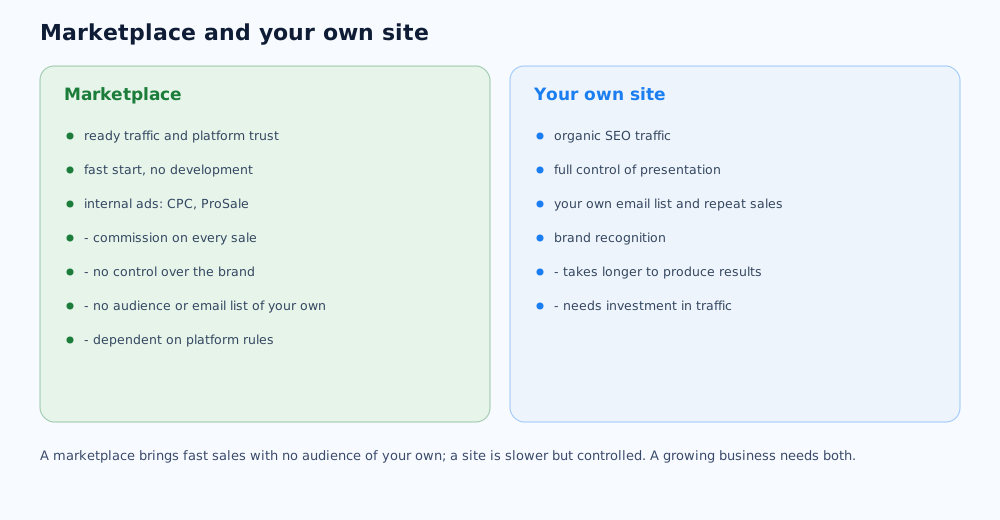
A marketplace doesn't let you build your own audience and email list, takes a commission on every sale, limits the presentation, and depends entirely on rule changes. Your own site adds what's missing there: organic search traffic, brand recognition, direct contact with the customer, and repeat sales with no commission. How to promote your own store is covered in the ecommerce SEO guide, with an example in the home goods store case study. Full-service promotion — on marketplaces and your own site — is the agency's services.
The same structured product data logic applies to ads on your own site — how to build the feed and launch Google Shopping is covered in the Merchant Center guide.
Beyond organic optimization, both platforms also offer paid promotion tools — how they work and when they're worth it is covered in advertising on Prom.ua and Rozetka Ads marketplaces.
08 Frequently asked questions
How is marketplace promotion different from site SEO?
On your own site you control the code, structure, speed, and links. On a marketplace all of that belongs to the platform — you influence only your own store: product cards, assortment, prices, order-handling speed, and reviews. Ranking is decided by the platform's internal algorithm, not Google, though product cards often show in Google's regular results too.
How do I raise a store rating on Prom.ua?
The rating grows from positive customer reviews, which come from fast order handling, timely contact with the customer, and careful delivery. Fully filled cards and current stock and prices also help. Prom.ua shows stores with a high level of service more, so the rating is first of all operational discipline.
What is ProSale on Prom.ua?
ProSale is Prom.ua's internal pay-per-click advertising: your products show higher in internal search and the catalogue. In the settings you set the bid and the regions where impressions matter. ProSale makes sense for key and high-margin products; the budget rarely covers the whole catalogue.
Can I do external SEO for Rozetka product cards?
Not fully: you don't control the structure and can't build links to someone else's domain. But Rozetka and Prom.ua cards are indexed by Google, so a well-filled card with an accurate title and specs gets impressions both in platform search and in Google. You can also drive external traffic to the cards from social and Google Ads.
Do I need my own site if I sell on a marketplace?
A marketplace gives a fast start and ready traffic, but it takes a commission, doesn't let you build your own audience, and depends entirely on the platform's rules. Your own site adds organic SEO traffic, brand recognition, an email list, and repeat sales. The optimal setup for a growing business is to be on both.
How much does marketplace promotion cost?
It's made of internal advertising (CPC on Rozetka, ProSale on Prom — pay per click, you set the budget), the platform's sales commission, and, optionally, external traffic from social and Google Ads. The work of optimising cards and the rating is either your team's time or an agency service.