
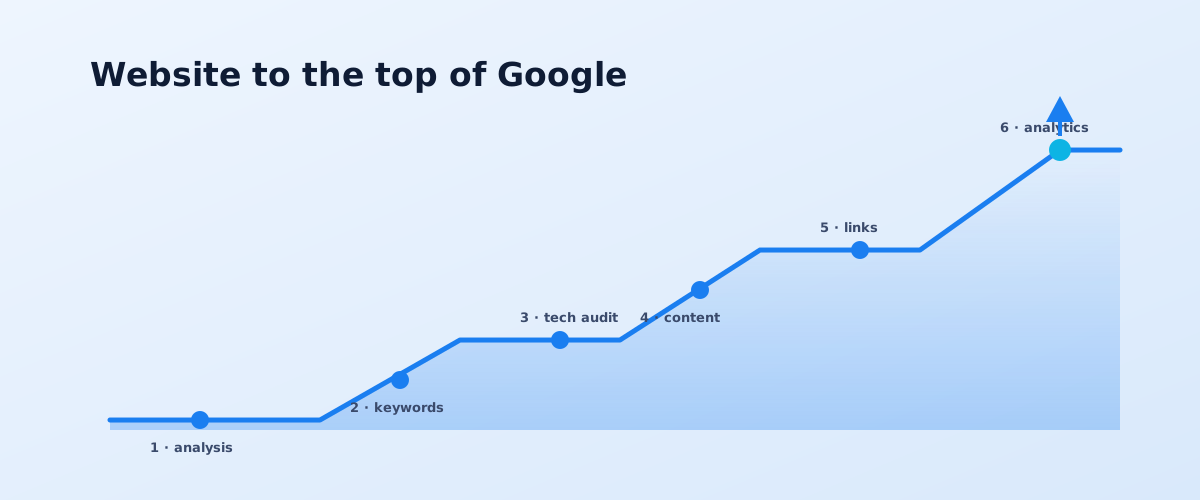
Promoting a website to the top of Google yourself is realistic if you understand that SEO is not a set of tricks but a sequence of six stages you go through in order. You cannot skip or reorder them: content will not help if the site is not indexed, and links will not save you if the pages do not match the queries. Below is a roadmap: what to do at each stage, what you can realistically do yourself, and where you will need a specialist.
01 The short answer: what DIY SEO consists of
Doing SEO yourself is six stages, and each one builds on the previous. The diagram below shows the whole sequence; then each stage gets a brief breakdown with a link to the detailed piece.
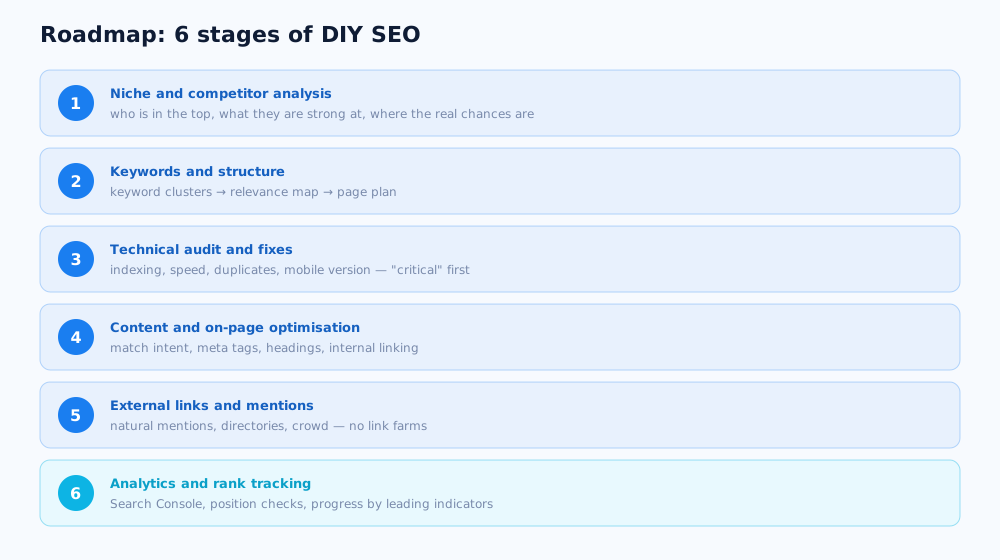
The key idea of the whole map: the foundation first — analysis, keywords, the technical side — then content and links, and only against working analytics. Most of this work can be done on your own; where exactly experience is needed is in the last section.
02 Stage 1. Niche and competitor analysis
Promotion starts not with edits on the site but with understanding who and what you are competing with. At this stage you need to look at who holds the top 10 for your key queries, what pages those sites have, their content volume and rough age, and which queries you can realistically fight for and which you cannot yet.
In practice: take 10–15 main queries, look at the SERP for each, note what kind of sites are in the top (aggregators, large brands, small businesses like yours) and which page formats Google treats as the right answer. This immediately shows realistic goals: for queries where the top is held only by marketplaces, a young site has no chance, but for narrow and regional ones, it does.
03 Stage 2. Keywords and structure
Next you build the keyword list — a set of queries split into clusters and mapped to pages. This turns promotion from "write copy" into a concrete plan: how many pages are needed, which existing ones to rework, and in what order.
The order of work: collect seed terms, expand them with Keyword Planner and competitor data, clean out the junk, split into clusters by intent and by the SERP, and build a "cluster → page" relevance map. Each step is broken down in detail in the article how to do keyword research. The output is a content plan that guides all the work that follows.
04 Stage 3. Technical audit and fixes
Before investing in content, you need to make sure Google can crawl and index the site normally. Technical errors are not always visible to the eye, but they are what most often keeps a site out of the top.
The minimum set of checks: indexing (robots.txt, sitemap, the Search Console report), speed and Core Web Vitals, duplicates and redirects, canonical correctness, the mobile version, HTTPS. Findings are sorted by priority: first what blocks indexing and drops traffic, then what slows growth. The full checklist with prioritisation is in the article a DIY SEO audit checklist.
05 Stage 4. Content and on-page optimisation
Once the foundation is ready, most of the growth comes from content that matches what people are searching for. At this stage you use the relevance map to create the missing pages and re-optimise the existing ones.
What you do with each page:
- bring the type and completeness of the content in line with what Google shows in the top for the target query;
- write a unique title and description, one meaningful H1, a logical subheading structure;
- add internal links from other pages with clear anchors, and links from the page to adjacent ones;
- cut the fluff and repetition — Google assesses the completeness of the answer, not the length of the text.
Google describes the principles of helpful content and matching the query in its SEO Starter Guide — the first thing to read before working on pages.
06 Stage 5. External links and mentions
External links are a trust signal: Google factors in whether other resources link to the site and how topical they are. In low-competition niches a basic set is often enough; in competitive ones, you will not reach the top for commercial queries without links.
What works and what hurts:
- Works: topical mentions and reviews, industry directories and listings, crowd marketing (useful answers in forums and communities), guest posts on live sites, natural links to useful content.
- Hurts: bulk buying of cheap links from marketplaces, links from off-topic junk sites, a sharp unnatural spike in link volume — this can earn a penalty.
How Google finds and assesses pages and links in general is described in the document on how Search works.
07 Stage 6. Analytics, rank tracking and what to do yourself
The last stage is not a one-off but ongoing: without data you cannot tell whether everything before it is working. Before you start, set up Google Search Console and GA4 with lead tracking, then watch the trend regularly.
What to look at in the first months: whether the number of indexed pages is growing, whether impressions for target queries are growing, whether average position is slowly improving. Traffic and leads come later, so judging by them early is premature — how to check positions properly is covered in the article how to check your Google rankings, and the real timelines in how long does SEO take.
What you can realistically do yourself: competitor analysis, keyword research, a basic technical audit, writing and optimising content, internal linking, analytics setup, rank tracking. Harder without experience: a deep technical audit of a large site, a link-building strategy, diagnosing drops after Google updates, and working in a highly competitive niche — that is where a specialist is usually brought in. How we approach it and what the timeline results are can be seen on the SEO promotion page and in the section of case studies with numbers.
If the site already follows this roadmap and still isn't growing, work through the causes in why your site isn't ranking on Google. And safe ways to build links for stage 5 are collected in the separate link building guide.
What on this roadmap changes in the age of AI search and what stays the foundation is covered in the SEO trends 2026 overview.
It is worth separately getting the link structure inside the site right — how to build it and spread equity between pages is explained in the internal linking guide.
If doing this yourself is taking too much time, it's worth weighing that against the cost of hiring help — compared in SEO agency, freelancer, or in-house specialist.
SEO is only one of several possible channels; to decide whether it's actually the right one to start with, it helps to run a marketing audit of the business first — covered in marketing audit: where to start promoting a business from zero.
08 Frequently asked questions
Can you promote a website to the top of Google for free?
Technically yes: analysis, keywords, the technical base, content and internal linking are done with free tools and your own time. But in competitive niches, reaching the top for commercial queries with no external links and no volume of content is almost impossible, and that needs a budget. Low-volume and informational queries are the ones most often won for free.
How long does DIY promotion take?
The first ranking movement comes in 3–4 months of regular work, meaningful traffic from month 6, and longer for a new domain. Doing it yourself is usually slower than with a team because the monthly volume of work is smaller: two or three pieces instead of ten. Timelines are covered in detail in a separate article.
What can I do myself and what needs a specialist?
You can realistically do: competitor analysis, keyword research, a basic technical audit, writing and optimising content, internal linking, analytics setup. Harder without experience: a deep technical audit of a large site, a link-building strategy, diagnosing drops after updates, working in a highly competitive niche.
Do you need paid links to rank in the top?
In low-competition niches, natural mentions, directories and crowd marketing are often enough. In competitive ones, external links are needed, but buying cheap links from marketplaces hurts: you risk penalties. What works is topical mentions, guest posts on live sites, and links that appear because people actually cite the content.
Where do I start if the site is brand new?
With niche analysis and keyword research: work out who is in the top, which queries you can realistically compete for, and which pages you need for that. In parallel — the technical base and Search Console setup. A new domain will have no visible traffic in the first months, and that is normal: you watch the growth of indexing and impressions.
How do I know the promotion is working?
In the first months, by leading indicators in Search Console: the number of indexed pages and impressions grows, average position for target queries slowly improves. Later, organic traffic and lead growth are added. If impressions are not growing at all after 2–3 months, you need to go back to the audit.